
If you are researching therapy options for a young child with autism, you have probably encountered the question of where therapy should happen: at home or at a center. Both settings have real value, and the right choice depends on your child and your family. That said, center-based ABA therapy offers specific advantages for children ages 2 to 6 that are difficult to replicate in a home environment, particularly when it comes to social learning, consistent routines, and access to a full clinical team. Here is what the research supports and what the day-to-day experience actually looks like for your child.
What Is Center-Based ABA Therapy?
Center-based ABA therapy is applied behavior analysis delivered in a dedicated clinical facility designed specifically for young children with autism spectrum disorder. Children attend the center for structured sessions (typically several hours per day, multiple days per week) in an environment built around their sensory, social, and developmental needs. The approach is evidence-based and guided by Board Certified Behavior Analysts (BCBAs) who develop individualized treatment plans for each child.
The center setting provides something a home cannot easily offer: a purpose-built space where every element, from the room layout to the materials to the daily schedule, is designed to support learning. Sensory integration equipment, visual supports, communication devices, and age-appropriate educational materials are all available and organized intentionally. The environment is warm and play-oriented, not clinical or sterile.
How It’s Different From Home-Based ABA
Home-based ABA brings the therapist to your child’s natural environment, which has real advantages: familiar surroundings, less transition stress, and the ability to work on skills in the context where they will actually be used. For some families, particularly those with very young children or children who are not yet comfortable in new settings, home-based services are the right starting point.
Center-based ABA adds layers that the home environment cannot easily provide. Other children are present, creating natural opportunities for social learning. The clinical team, including BCBAs, behavior technicians, and sometimes speech or occupational therapists, is on site and collaborating in real time. The space itself is structured to minimize distractions and maximize learning opportunities. These are not criticisms of home-based care; they are features unique to the center setting that become increasingly important as a child develops.
Why the Center Environment Supports How Young Children Learn
Young children with autism are not small adults. They learn through play, movement, exploration, and interaction with peers. A well-designed center-based program leans into that reality rather than fighting it.
Peer Modeling and Social Practice
One of the most significant advantages of center-based ABA is access to peers. Children learn a tremendous amount from watching other children, and social skills, the area where many children with autism need the most support, can only be practiced in a social setting. At a center, your child has daily opportunities to share materials, take turns, respond to other children’s communication attempts, and navigate the small social negotiations that build the foundation for friendships and school readiness.
This kind of learning cannot be scripted into a home session. It happens naturally when children are together in a shared space with trained staff guiding the interactions.
Consistent Routines That Reduce Anxiety
Many children with autism thrive on predictability. A center-based program offers a consistent daily structure: arrival routines, activity transitions, meal times, group activities, and departure routines that repeat in the same order each day. This predictability reduces anxiety and frees up cognitive energy for learning. At home, the natural interruptions of household life (siblings, deliveries, phone calls, shifting schedules) can disrupt the consistency that a young child with autism needs during therapy.
What a Child-Led, Montessori-Inspired ABA Center Actually Looks Like
If you are imagining a sterile room where your child sits at a table doing flashcard drills for hours, that is not what modern center-based ABA looks like, at least not at a program designed for the 2 to 6 age group.
A child-led, Montessori-inspired approach means the therapist follows the child’s interests and motivations. If your child is drawn to building blocks, that becomes the vehicle for teaching requesting, sharing, fine motor skills, and turn-taking. If your child loves music, music becomes the context for communication practice and following directions. The clinical goals are evidence-based and measurable; the delivery is play-based and responsive to what engages your child.
Natural Environmental Training (NET) vs. Discrete Trial Training (DTT)
Two primary teaching methods are used in most center-based ABA programs. Natural Environmental Training (NET) embeds learning into play and daily activities. The child leads; the therapist captures teaching moments within whatever the child is already doing. Discrete Trial Training (DTT) is more structured: the therapist presents a specific instruction, the child responds, and the therapist provides feedback. DTT is useful for building foundational skills that require repetition.
The best programs use both. For children ages 2 to 4, NET tends to dominate because play-based learning aligns with how young brains develop. As children approach ages 4 to 6, more structured table time and scheduled activities are introduced to prepare for the classroom environment they will enter in kindergarten. The balance shifts based on the child’s development, not a rigid protocol.
If you would like to see what this looks like in person, Norfolk Autism Center in Suffolk welcomes families to visit the center and observe the environment. No obligation, no pressure. Call 757-777-3229 to schedule a tour.
Finding Center-Based ABA Therapy in Hampton Roads
For families in Norfolk, Virginia Beach, Chesapeake, Newport News, Portsmouth, and surrounding Hampton Roads communities, access to quality center-based ABA for young children matters. The early intervention window, ages 2 to 6, is when the brain is most responsive to behavioral intervention, and delays in starting therapy can mean missed developmental opportunities that are harder to recapture later.
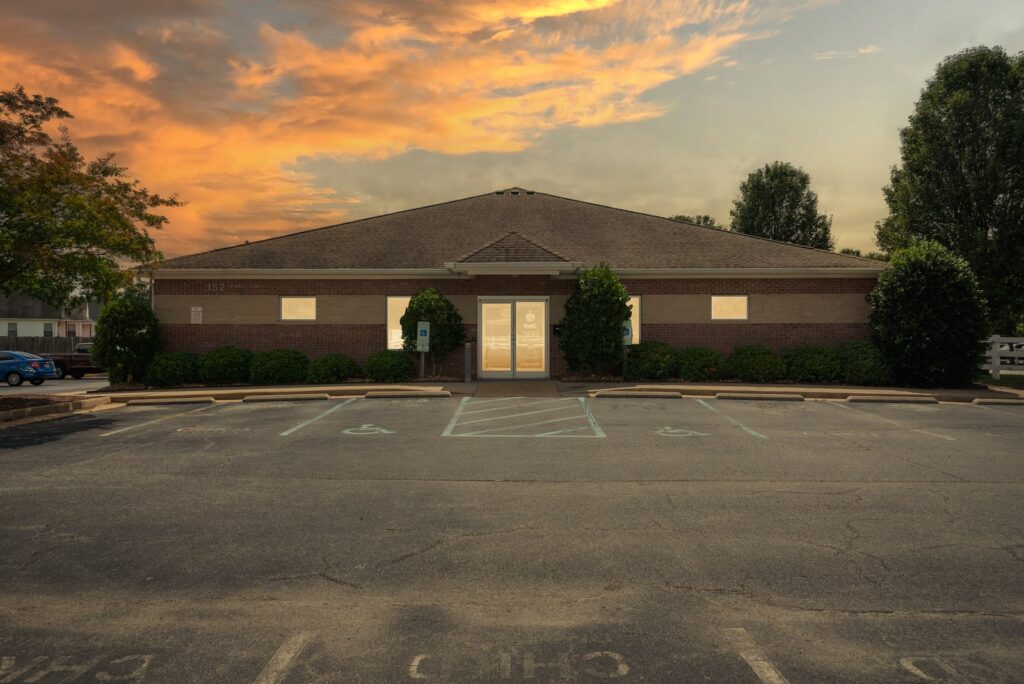
Norfolk Autism Center is located at 152 Burnetts Way in Suffolk, VA, and serves families across Hampton Roads. The center provides ABA therapy for children ages 2 to 6 using a Montessori-inspired, child-led approach grounded in evidence-based practices. Each child’s treatment plan is developed by a BCBA and includes both NET and DTT methods, tailored to the child’s age, interests, and goals. Parent training is built into the program, with weekly one-hour in-home sessions to help you reinforce what your child is learning at the center.
Norfolk Autism Center accepts Anthem, Sentara, Molina, Aetna, CareFirst, and all Virginia Medicaid plans. The center also works with military families and understands the realities of deployment, PCS transitions, and the need for continuity of care across moves. If you are transferring from another ABA provider, the team can coordinate with your previous program to minimize disruption.
Call 757-777-3229 or email the team to ask questions or schedule a visit. You will see the space your child would be in, meet the staff, and get a clear sense of whether the fit is right.
What to Look for in a Center (and Questions to Ask)
When evaluating any center-based ABA program, ask about the BCBA-to-child ratio and how often the BCBA directly observes and adjusts your child’s program. Ask whether the center uses both NET and DTT, and how the balance shifts as your child develops. Ask about parent training: how often, in what format, and whether it includes in-home sessions. Ask about the physical space: is it designed for young children, with sensory supports, age-appropriate materials, and areas for both active play and focused work? Visit during active hours and watch how the children and therapists interact. Trust what you see.
Frequently Asked Questions
What Is Center-Based ABA Therapy and How Does It Work?
Center-based ABA therapy is applied behavior analysis delivered in a dedicated facility designed for children with autism. A BCBA develops an individualized treatment plan, and trained therapists work with your child using play-based and structured teaching methods to build communication, social, and adaptive skills in a consistent, distraction-reduced environment.
Is Center-Based ABA Therapy Better Than Home-Based ABA for Toddlers?
Neither is categorically better; they offer different advantages. Center-based ABA provides peer interaction, a full clinical team on site, and a structured environment. Home-based ABA works in familiar surroundings and addresses skills in context. Many families use both at different stages. For children ages 2 to 6, center-based programs offer social learning opportunities that are difficult to replicate at home.
How Many Hours Per Week Does Center-Based ABA Therapy Typically Require?
Most center-based ABA programs for young children involve 20 to 40 hours per week, depending on the child’s needs and the BCBA’s recommendation. The specific number of hours is based on a comprehensive assessment and adjusted over time as the child progresses.
Will My Child Be Happy in a Center-Based ABA Program, or Will It Feel Like School?
A well-designed center for ages 2 to 6 feels more like a playroom than a classroom. Play-based teaching methods like NET use your child’s interests as the vehicle for learning, so sessions are engaging and child-led. The goal is for your child to enjoy coming to the center, because children learn more effectively when they are happy and motivated.
Does Center-Based ABA Therapy Accept TRICARE or Medicaid?
Coverage varies by provider. Norfolk Autism Center accepts all Virginia Medicaid plans as well as Anthem, Sentara, Molina, Aetna, and CareFirst. Contact the center directly at 757-777-3229 to verify your specific plan.
What Should I Look for When Choosing a Center-Based ABA Program?
Look for a BCBA supervising each child’s treatment plan, a low therapist-to-child ratio, use of both NET and DTT methods, a parent training component, and a physical environment designed specifically for young children. Visit during active hours and observe how therapists interact with the children.
Can We Transition From Home-Based ABA to a Center-Based Program Without Losing Progress?
Yes. A good center-based program will coordinate with your previous provider to review existing data, goals, and progress. The BCBA will conduct a new assessment and build a treatment plan that incorporates what your child has already achieved, ensuring continuity rather than starting over.
Learn More
Autism Speaks: Applied Behavior Analysis — Overview of ABA therapy and what families should know.
Behavior Analyst Certification Board (BACB) — Verify BCBA credentials and find certified providers.